A Classic About War, Betrayal, Naivete and Death
The Quiet American by Graham Greene (1955) – Thomas Fowler is a British journalist covering the war in French Indo-China (Viet Nam). Cynical and aloof, he has created a quiet cocoon for himself. A life bounded by the carefully managed press opportunities performed by the French authorities, his drug addiction, and a beautiful young girl. All of it allows him to forget the shattered life he left behind, and the unanswered questions that remain. Then stepping off an American plane comes Alden Pyle. Pyle’s naïve worldview both attracts and repels Fowler. Out of this new “friendship” arises conflicts arise both professional and personal.
Why I Liked It – Greene is brilliant here, creating characters caught in situations of increasing tension.
Here’s another outstanding book filled with people who are neither particularly nice or likeable. Yet, the story itself is gripping and intense. Fowler is a selfish, lazy man with a streak of casual cruelty. He loves no one, not even himself, but does love the comfortable cloak of a life he has. In his professional life, he does as little as he can, farming out routine tasks to a local assistant. It becomes clear as the story passes that he doesn’t love Phuong, his Vietnamese mistress. She is essential to his comfort, but he will discard her without a thought if needed. In the end, Phuong is the nicest and most honest character in the story.
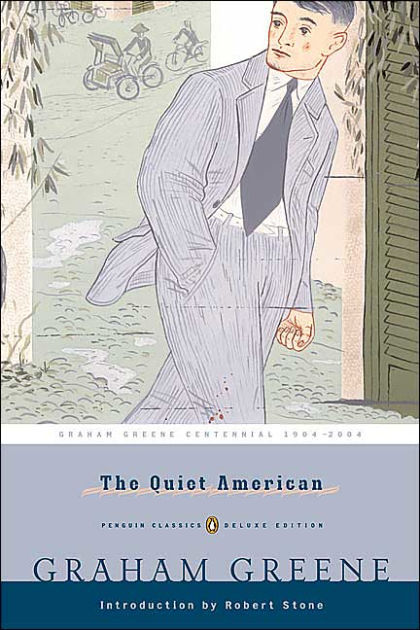
Meanwhile, Pyle is, at best, naïve and, at worst, a fool. He is the kind of fool that was all too common following the Second World War. America was full of itself and believed that the entire world was waiting for the invitation to be just like us. Pyle arrives in southeast Asia with no experience, little information, and a head filled with “expert” advice on how to win the hearts and souls of the region. Greene offers the perfect summation of Pyle – “…he was impregnably armored by his good intentions and his ignorance.” It’s a combination that results in his death at the beginning of the story. The rest is told by Fowler in retrospect.
The late 1950s saw the ongoing collapse of French colonial power in the world. By the mid-‘50’s, France would withdraw from the region in defeat, leaving a divided Viet Nam as pawns in a proxy war. The author draws on the history for the background to his story. There is the doomed militia general Thé, and two bombings that are historical events integral to the story. Pyle wants to use the general to create a counterbalance to other non-democratic forces in country, while the bombs will finally force Fowler to leave behind his unengaged façade.
I don’t want to fall into a spoiler but there is a simple scene near the very end that struck me with it’s elegant simplicity. At the center of the story is a betrayal. The guilty party acknowledges their culpability with a single sentence with a restaurant maitre de. It is pure, spare, and devastating. Look for it.
The book’s overall cynicism about both religion and American foreign policy made it controversial when published. Some will find it so today, I think. It’s hard to argue about the latter looking back over the blundering egotism that led the United States into an unwinnable war. Neither old school colonialism nor post-war neocolonialism have shown much worth celebrating. But this is a book well worth celebrating. Greene puts you into the hot, humid world of contemptuous hedonism of journalists, military and diplomatic staffers wading through a world none of them understand.
The characters are compelling, even as they are unpleasant. Each is carefully lacquered in a thin coat of “civility”, designed to make them acceptable to one another. Greene is a master of the conflicts of religion, politics, and personal weakness. He has a well-deserved reputation in literary circles, but it’s always felt like he’s a bit forgotten these days. Don’t make that mistake. Here is one of the great novels from one of the greatest writers of the 20th Century. It’s not to be missed.
Rating – ***** Highest Recommendation

