An Undead Tale That Comes With A Really Good Meal
Dracula by Bram Stoker (1897) – An ancient evil arrives from central Europe in England. The Count claims a beautiful young woman as his first victim, and her friends band together to fight back against the monster.
Why I Liked It – The horror holds up well over a century later.
I bump another book off my list of “Classics I Have Never Read.” The only reason this one stayed on the list as long as it has is that I don’t read a lot of horror. “Frankenstein” remains on the list, as does “The Haunting of Hill House” to name just two. I’ve read some Stephen King, but I tend toward his more “science fictiony” stuff, like “The Dead Zone” and “The Stand”, and his short stories. In my head, there was a lurking concern about language usage, but that’s more of an early 19th Century issue for me that this.
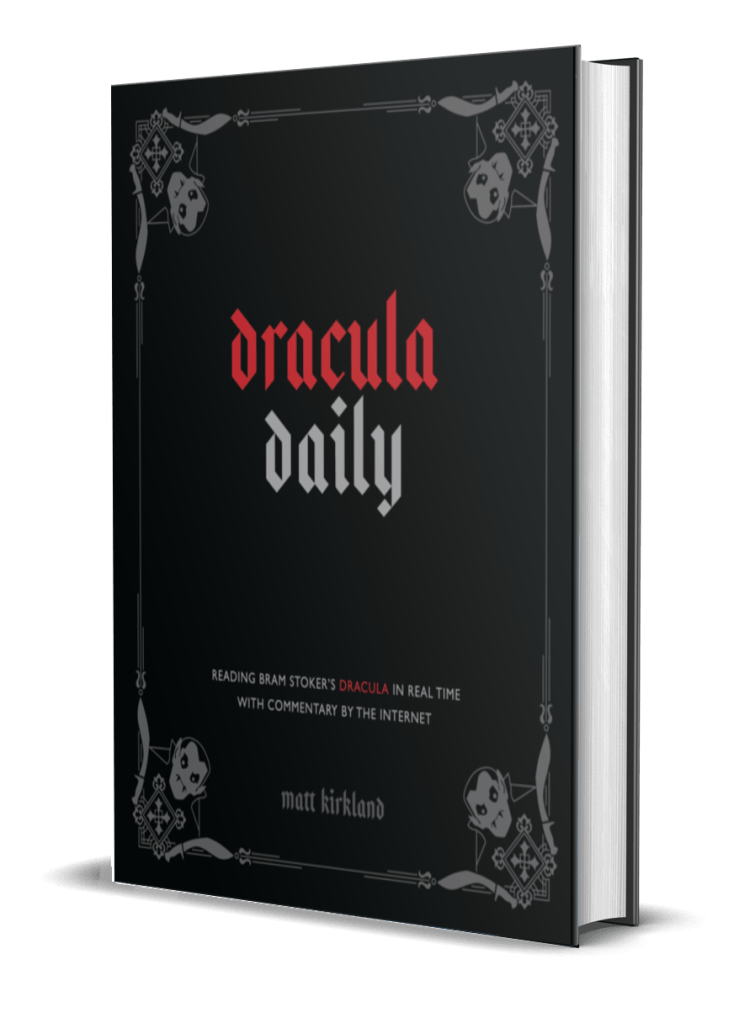
First, a tip of the cap to the folks at Dracula Daily. Matt Kirkland noticed that since the novel is written entirely in diary entries, telegrams, letters, and other dated items, the story can be arranged chronologically. Stoker didn’t do this in the original, which causes some jumping back and forth on the timeline. On the day in question (the action takes place between May 3 and November 7), you receive an email with that day’s action. It allows the reader to take the novel in small bites (sorry, couldn’t resist). It’s allowed me to read this book a bite at a time (sorry, again), while also reading a second book. They have published a paper version of the novel in this format for those who want it all at once. Clever idea!
So, what did I discover when I cracked the seal on the Count’s tale? A book that deserves its rep as a classic. I’ve seen several movie versions of the story, and all of them fall short of the original. The movie makers want to do their own thing, create their own spin. That’s fine, but they leave a stunning story sitting on the sidelines. Stoker’s blood sucking horror lacks the melodramatic scenery chewing of the modern ones. Here, Dracula is a creeping horror, something terrible and deadly. There’s no sophisticated sexiness for him or his undead minions. The delicate and pure-hearted Mina Murray/Harker transforms into a vulgar monster, interested in slaking a self-centered appetite that would consume everything in her path. The scene where Van Helsing and friends finish her is startling in its intensity. Even without detailed descriptions of what is done, the result is terrifying.
The other revelation for me is Renfield. Movie versions make him a sniveling, Gollum like creature of the Count’s. In the original, we discover a man of size and strength with a keen intellect connected to an evil cunning. Despite this, Renfield remains a revolting person, filled with violence and death. This makes the character much more compelling for me.
The book shows its age in the relationships between the main character. Mina Harker is a strong, intelligent woman, without whom the effort to defeat the vampire would have been harder. But she agrees with the men’s decision to keep her on the sidelines. The men are all classic examples of the Victorian Age’s archetype of “real men.” They are intelligent, caring, slightly distant from the people around them, and willing to shoulder whatever noble burden is thrust upon them. They express their emotions in front of one another and the women, but are ashamed of showing this “weakness”. It makes them feel artificial. Only Van Helsing feels like he would fit easily into the modern world. As for the Professor, he bears no resemblance to more recent, action figure style screen representations. But his gruff exterior and slightly mangle English make him more endearing for me. For all the protestations about the younger men being “men of the world”, Van Helsing has seen more deeply, and into darker places, than any of these gentlemen have even imagined.
Rating – ***** Highest Recommendation
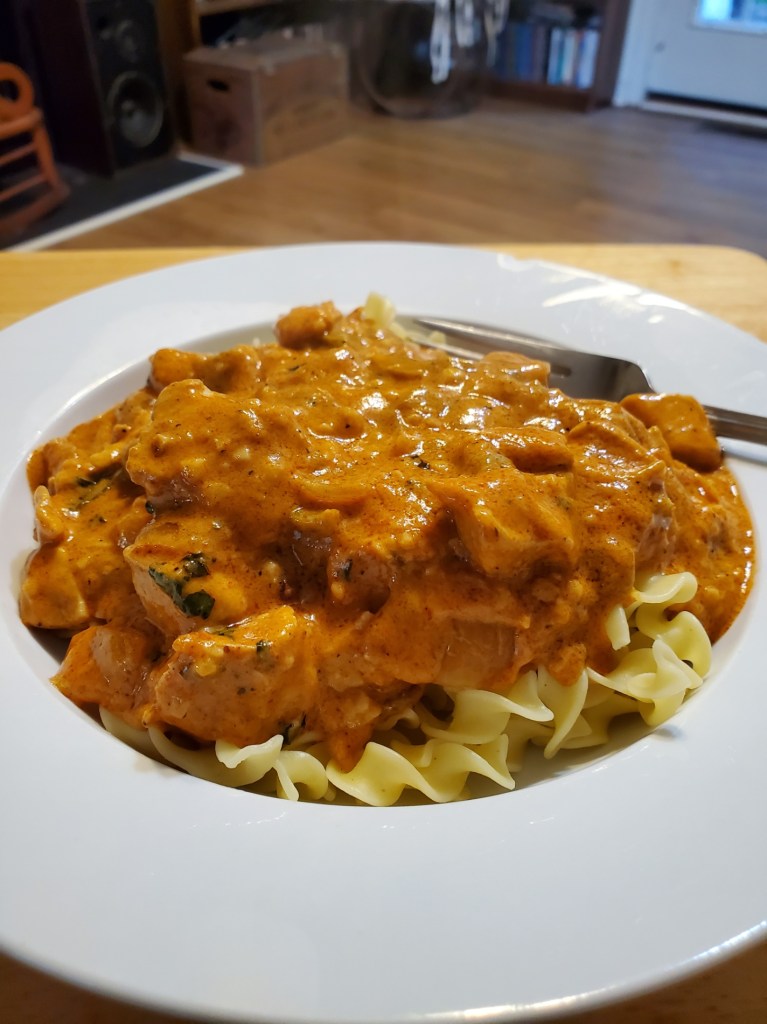
There is one other thing, rather unique to this book. I discovered a great new dish from it! When Jonathan Harker goes to Transylvania, he comes across a dish that he raves about. A little research turns up a recipe for Paprika Hendl, also called Paprikash. The dish is common throughout the region and is simple to make. Chicken, onion, tomato, paprika (LOTS of paprika), salt, pepper and then a mix of cream or sour cream and flour. Serve it over noodles and you’ll know how Jonathan felt when he discovered it. Wonderful flavors, brilliant color. It’s part of our year long food rotation now.