Sex, Jazz, and a Serial Killer
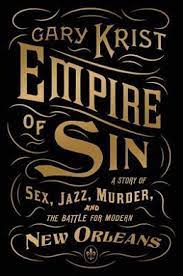
Empire of Sin – Sex, Jazz, Murder and the Battle for Modern New Orleans by Gary Krist (2014) Long before Las Vegas carried the name of “Sin City”, that “crown” might have belonged to New Orleans, Louisiana. Crime flourished in a city with a lax police force and politicians willing to turn a blind eye to any activity that made money. The city officials set aside an entire section of the city, Storyville, in the hope of containing the carnal pleasures. Prostitution flourished in both Storyville and the segregated sibling Black Storyville. Jazz would be born in the latter, and nourished in the former. Eventually, the social elites and reformers would join forces to clean up immorality and crime. The result was a thirty-year war of the city against itself. Filled with the kinds of personalities only New Orleans could birth, Gary Krist creates a fascinating look at the unique history of this iconic city.
You might have picked up that I have a soft spot for the Crescent City. Growing up in the middle-class suburbs of the ‘60s and ‘70s, New Orleans has always had an exotic allure for me. I’ve visited the city several times, and even have family there. My travels have taken me to Rome, Las Vegas, Toronto, Frankfurt, Santo Domingo and more, but there’s no place quite like New Orleans. From the Garden District to the French Quarter, beignets to some of the finest meals in this hemisphere, there is nothing simple about the city.
There are many influences on the culture of the city. It is a port city, with the traditional vices that come with that. While the architecture has a strong Spanish influence, the mores have deep roots in French society. From these diverse sources comes a society that is both profound and profoundly divided. Once New Orleans became part of the United States, there is an influx of the more staid morality of the northeastern Puritans. Inevitably, those many societal forces would come into conflict. Among the Italian community, the “Black Hand” extortion rings operated with impunity. When a reforming police commissioner intervenes, someone assassinates him. From that event springs decades of conflict among a wide range of groups. The moral reformers go after prostitution, alcohol, dancing, tobacco and music. The great Jazz traditions of Chicago, New York, and elsewhere owe it all to the persecution of musicians in Louisiana. In the middle of it all stands the “Mayor of Storyville”, Tom Anderson. Charming, intelligent, and a natural “fixer”, Anderson became wealthy, and got elected to a position in the Louisiana state government. All around him flourished entrepreneurs of every vice. When prohibition icon Carrie Nation arrived in the city, Anderson invited her to a sit-down meeting with the madam and ladies of one of the finest brothels in the city. Who assured her they were in a profession they had chosen and in which they were content. At the same time, the musicians of the city were exploring the earliest versions of “jass”, what we know today as jazz. With a newfound freedom of style and improvisation, Buddy Bolden changed the way music was played. After him came Joe “King” Oliver, Sidney Bechet, and a boy who honed his musical skills at the city’s Colored Waifs Home. Louis Armstrong would take Jazz to the next level. The stories weave back and forth, pulling everyone into the volatile mix.
As Storyville dies (finally at the order of the United States government), a possible serial killer terrorized New Orleans. There are striking similarities with the Jack the Ripper spree two decades before in London. Horrific murders, largely against a specific category of people. The murders in New Orleans involved the use of axes, and the victims were mainly owners of corner grocery stores. But this madman was a New Orleanian to his core. In a letter to the media, he promised to spare any citizen who had a live jazz band playing in their homes on the night of his next attack. The Axman Murders remain unsolved and iconic.
Just like the city itself, “Empire of Sin” offers lots of spice, diverse flavors that create a fascinating read. If you’re a true crime fan, a Jazz fan, or a history buff, you will find plenty to enjoy here. And if you love a certain bayou city the way I do, this should be a must read.
4 stars – Recommended


Leave a Reply