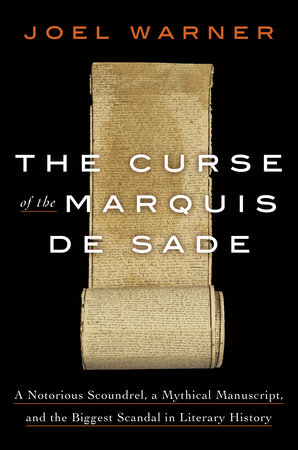
“The Curse of the Marquis de Sade: A Notorious Scoundrel, a Mythical Manuscript, and the Biggest Scandal in Literary History” by Joel Warner (2023) – In the centuries since its creation, the novel “120 Days of Sodom” has fascinated parts of the book world. A “lost” book, with an infamous author, a history that weaves through French history, and a story that might have the power to damage the mind of the reader, it has been sought for years. When it surfaces, bad luck follows those who covet it. Eventually, it finds its way to the center of the biggest literary scam of all time.
Why I Liked It – A fascinating and byzantine story that weaves the past, present, and a unique culture.
I spent an unusual amount of time while reading this book shaking my head. There is a lot to gather in as the story unfolds. More than a little of it is strange, beginning with the author at the center of the story, Donatien Alphonse François, Marquis de Sade. We forget sometimes that he had a full name, not just a title. At the other end of the time scale of this story is Gérard Lhéritier, winner of the largest Euro millions lotto jackpot in France, and the man who tried to recreate the rare manuscripts business. Between those two men are two centuries of myth and misadventure centered on “120 Days of Sodom”.
That novel is stranger than fiction all by itself. Just before the French Revolution, the Marquis found himself in jail again. As always, his charges centered on sexual perversity. De Sade was at best a strange man, and at worst (especially towards the end of his life) suffering from severe mental illness. The peak of his perversity is the novel that he wrote while held in the Bastille. He had to write it in secret, so even its form is bizarre – small sheets of paper glued together to form a manuscript 39 feet long and just under five inches wide. He rolled it up and hid it in the cracks of his cell. On the day that the prison was stormed, de Sade wasn’t there. Transferred elsewhere, he believed his masterpiece was lost. But someone found it and thus began its long journey through many people’s hands.
The “curse” promised in the title seemed vague to me. There is no string of unexplained deaths like Tut’s tomb or the Hope Diamond. The novel is, according to those who have read it (not me), a virtual look into the deepest, foulest recesses of the human soul. It describes every possible sexual deviation supposedly. At the same time, some have called it the greatest piece of writing ever.
I have my doubts.
Gérard Lhéritier stands at the other end of the timeline of this story. His portion of the story is the one I found the hardest to follow. The rare manuscript business in France took/takes itself seriously. It seems to be more a religious order than a business. When Lhéritier moved to create a new system, one that monetized the beloved manuscripts in a way to push prices every higher, incurring the old guard’s outrage. While the fraud allegedly committed (it doesn’t appear that the case has been brought to trial yet) are mightily disruptive in their context, it remains a large tempest in a small teapot.
Sticking to the actual history robs the author of a really wham-bang-Dan-Brown kind of ending. There is still plenty here to intrigue and titillate the reader.
Rating – *** Worth A Read
 Stories Are My Life
Leave a comment